The Last Human Curator
What Remains When Machines Learn to Curate?
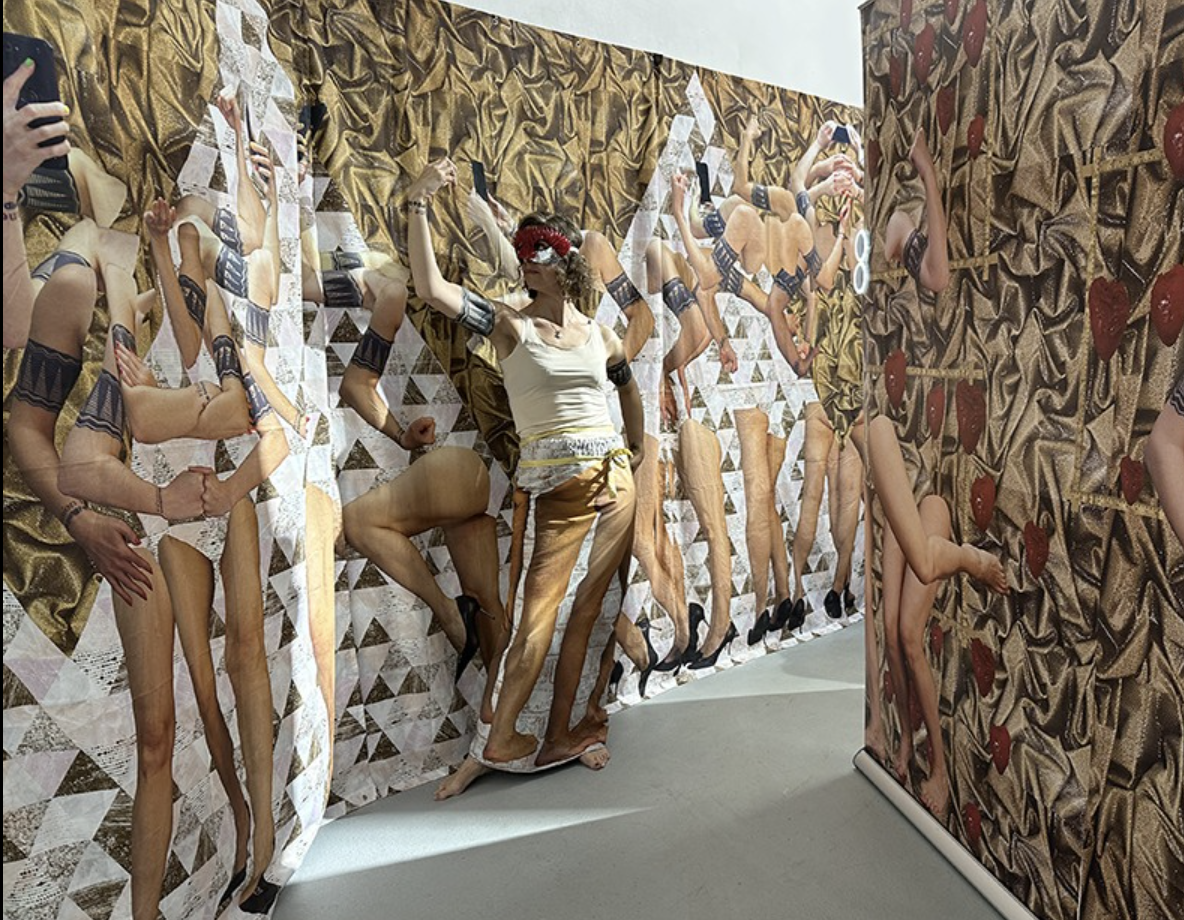
For centuries, the curator has occupied a peculiar position within the cultural ecosystem. Part scholar, part editor, part diplomat, part caretaker, the curator has traditionally mediated between artworks and audiences, shaping not only what is seen but how meaning is constructed.
Today, that role is undergoing a profound transformation.
Artificial intelligence is increasingly capable of performing tasks once associated with curatorial labor. It can analyze vast image datasets, trace formal and thematic relationships, generate exhibition concepts, draft interpretive texts, predict visitor behavior, and model historical context at a scale no individual could match. What was once considered the product of specialized expertise is becoming computationally reproducible.
The question is no longer whether machines can assist curators. They already do.
The more urgent question is what remains uniquely human when the institutional functions of curation are automated.
One possible answer is judgment. Another is intuition. Yet both are increasingly difficult to define. Many curatorial decisions are shaped by pattern recognition, historical comparison, and contextual synthesis—the very operations at which machine learning systems excel.
If curation were reducible to information processing, the curator’s disappearance would seem inevitable.
And yet museums are not simply information systems.
An exhibition is not a neutral arrangement of data, but a proposition about what matters. Every selection reflects values, exclusions, and interpretations that cannot be fully resolved through optimization. Algorithms may identify patterns, but they do not experience uncertainty, doubt, responsibility, or ethical consequence. They do not stand before a work and feel that it resists explanation.
The human curator persists precisely in this space of irresolution.
Curating has always involved more than expertise. It requires the willingness to commit to a position without complete certainty. To select one work and exclude another. To create meaning where no final authority exists. To accept accountability for decisions that remain fundamentally subjective.
In this sense, the curator’s role may become less operational and more existential.
As institutions adopt increasingly sophisticated technological systems, the curator may cease to function primarily as organizer or interpreter and instead assume a different task: preserving ambiguity within environments designed for prediction and control.
This transformation mirrors a broader shift within contemporary culture. Human judgment is being displaced not because it is inefficient, but because efficiency has become the dominant institutional value. In museums, as elsewhere, optimization promises greater relevance, accessibility, and measurable engagement. But relevance and significance are not the same.
Art has always exceeded the logic of metrics.
The works that endure are often those that resist immediate comprehension. They generate meanings that unfold slowly and unpredictably, sometimes over decades. Their value cannot be fully anticipated by behavioral models or audience analytics.
The curator’s responsibility, then, is not simply to organize information but to protect conditions in which uncertainty can remain productive.
Perhaps the last human curator will not be the most knowledgeable person in the museum. Nor the most efficient. Their role may be far quieter.
They will remain as the one who says:
This work cannot yet be explained.
This connection is not statistically obvious.
This ambiguity should be preserved.
In an age increasingly governed by automated interpretation, such gestures may become the most essential curatorial acts.
The future of curation may therefore depend not on competing with machines, but on safeguarding those dimensions of artistic experience that cannot be optimized.
Not because technology lacks intelligence.
But because meaning still requires someone willing to pause before deciding what it means.